
The Ultimate
Panther Chameleon
Care Guide
The Panther Chameleon is nature's most vibrant living canvas. This comprehensive guide covers the intricate biological demands of the Furcifer pardalis, from the high-canopy locales of Madagascar to the technical precision of a professional Panther Chameleon habitat setup.
Panther Chameleon Care Guide: Origins & Instincts
Native exclusively to the varied micro-climates of Madagascar, the Panther Chameleon is a marvel of visual communication and predatory speed. Unlike sedentary snakes, chameleons are highly active hunters that require a 3D environment to navigate and thermoregulate.
They possess zygodactylous feet for gripping narrow branches and independently rotating eyes for 360-degree surveillance. Their famous color-changing ability is primarily used for social signaling and temperature regulation rather than camouflage. Because they are diurnal and arboreal, Panther Chameleon care requires a rigorous focus on light quality and vertical climbing density.
Vital Statistics
Common Name: Panther Chameleon
Lifespan: 5–7 Years with proper care
Activity: Diurnal (Day Active)
Basking Temp: 26°C - 28°C
Panther Chameleon Habitat Setup: Vertical Complexity
A professional Panther Chameleon habitat setup is defined by vertical volume and airflow. Unlike floor-dwelling reptiles, chameleons require "3D Climbing Matrices"—a network of vines and branches that utilize every inch of the enclosure's height. Proper ventilation is non-negotiable; stagnant air is the primary cause of respiratory infections.
Vertical Gradient
Utilize a screen or hybrid enclosure at least 120cm (4ft) tall. This allows the chameleon to move between a warm basking zone and a cooler, humid lower canopy.
UVB Saturation
T5 HO (High Output) UVB lighting is essential. Without a dedicated 12-hour light cycle, these animals cannot process calcium, leading to Metabolic Bone Disease.
Hydration Points
Chameleons rarely drink from standing water. Use a combination of automatic misting and drippers to provide water droplets on leaves for them to lick.
For a mature male, BundleBiome recommends a minimum enclousure of 60x60x120cm (2x2x4'). This vertical orientation provides the safety of height while allowing for the dense "leaf-cover" zones chameleons use to hide from perceived threats.
Panther Chameleon Care Guide: Metabolic Fueling
Nutrition in this Panther Chameleon care guide is treated as a high-speed process. These lizards have fast metabolisms and require a diverse diet of gut-loaded insects. Variety is the key to preventing "hunger strikes," a common behavior when chameleons grow bored of a single feeder type.
We advocate for the Hydration-First Rule: Ensure the chameleon is fully hydrated before the first feeding of the day. This aids in digestion and ensures the tongue remains sticky and functional for hunting.
Always remember: Gut-loading your insects is just as important as the insects themselves. Feed your feeders high-quality greens and supplements 24 hours before offering them to your chameleon.
Maintenance Protocol
Panther Chameleon Care Guide: Health & Bio-Signals
In any Panther Chameleon care guide, understanding "bio-signals" is the difference between a thriving animal and a medical emergency. Because chameleons are ectothermic, their immune system is entirely dependent on the habitat's thermal accuracy.
The Tongue Test: A healthy panther chameleon should have a fast, accurate tongue. If you notice "short-tongue syndrome" or the animal struggling to retract its tongue, this is often a sign of Calcium/D3 imbalance or advanced dehydration.
Dysecdysis (Stuck Shed): Unlike snakes, chameleons shed in patches. If skin remains stuck on the toes or the tip of the tail for more than 48 hours, your humidity levels are likely too low during the "Nighttime Humidity Spike."
Diagnostic Checklist
Panther Chameleon Care Guide: Locale Identification
Unlike most reptiles, Panther Chameleons are categorized by their "Locale"—the specific region of Madagascar they originate from, which determines their adult color palette.
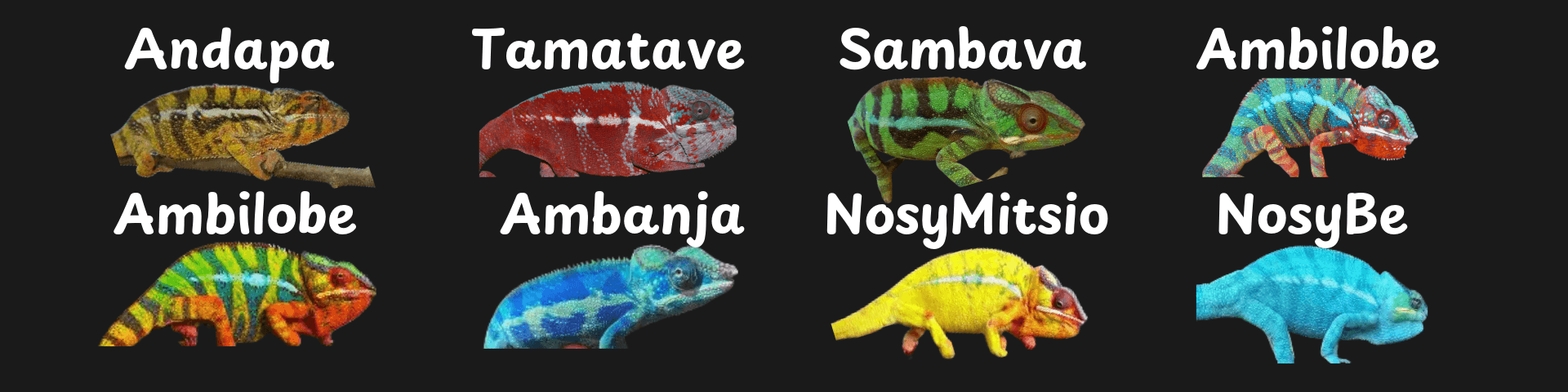
The Genetic Spectrum
There are over a dozen well‑known panther chameleon locales, each producing its own signature colour range and pattern. With extensive variation within and between locales, every keeper can find a look that fits their preferred aesthetic.
Displaying Morphs
Display cool‑toned locales against warm natural woods and neutral backdrops. Display warm‑toned locales against dense green foliage and deeper shadow zones to enhance their contrast and saturation.
Environmental Change
A chameleon’s colour intensity can shift throughout the day in response to temperature, mood, and light, a normal physiological process that temporarily amplifies or softens their baseline colours.
Panther Chameleon Care Guide: Humidity & Temperature
Creating a successful Panther Chameleon habitat setup requires mastering the "Inverse Relationship" between heat and moisture. In the wild, as temperatures drop at night, humidity naturally rises. Mimicking this cycle is the "holy grail" of chameleon husbandry.
The Thermal Gradient
Basking: 28°C - 30°C (82-86°F)
Ambient: 22°C - 25°C (72-77°F)
Provide a single heat source at the top so the chameleon can choose its own internal temperature by moving vertically.
The Nighttime Drop
At night, all heat must be turned off. A healthy drop to 15°C - 18°C (60-65°F) is essential. Without this cooling period, their metabolism never rests, which significantly shortens their lifespan.
Hydration Architecture
Day (50% Humidity): Focus on air movement to prevent bacteria.
Night (80-100% Humidity): Use a cool-mist fogger to create a "cloud zone," allowing them to hydrate without getting wet/cold.
The High-Fidelity Panther Chameleon Advantage
In the high-humidity world of our Panther Chameleon care guide, maintaining live plants can be a challenge. Root rot and soil-borne pests are common in the vertical enclosures required for these species. High-quality artificial foliage offers a professional alternative.
Our high-fidelity leaves are designed to "catch" and hold water droplets, providing perfect drinking surfaces for your chameleon. They are easy to deep-clean, ensuring that the heavy misting required for these animals doesn't lead to bacterial growth or mold within the enclosure's climbing structure.
Why High-Fidelity?
Hydration Support: Engineered to hold water droplets longer.
Pest Prevention: Zero risk of gnats or soil parasites.
Structural Strength: Vines that won't wilt under the weight of a male.
Visual Impact: Lush, permanent greens that never fade.
The BundleBiome Solution
Designing a vertical Madagascan canopy requires precision. At BundleBiome.ca, we specialize in curating the world's most realistic, lizard-safe climbing structures. We provide the density your chameleon needs to feel safe and the hydration surfaces they need to stay healthy.
Our Tropical Bundles are engineered for airflow and vertical utility. We eliminate the guesswork, providing a scientifically balanced biome that supports the chameleon needs of the world's most famous chameleon species.
Your Madagascan Biome
Expert care starts with expert infrastructure. Our Tropical Biome Bundles provide the vertical density and hydration points your Panther Chameleon deserves.
See All Guides

