The Horsfield's
Tortoise
Masterclass
The ultimate survivor of the Central Asian steppes. This guide details the environmental logic required for Testudo horsfieldii, from deep-burrowing substrate to a professional Horsfield's Tortoise habitat setup.
The Horsfield's Tortoise Care Guide: Evolution
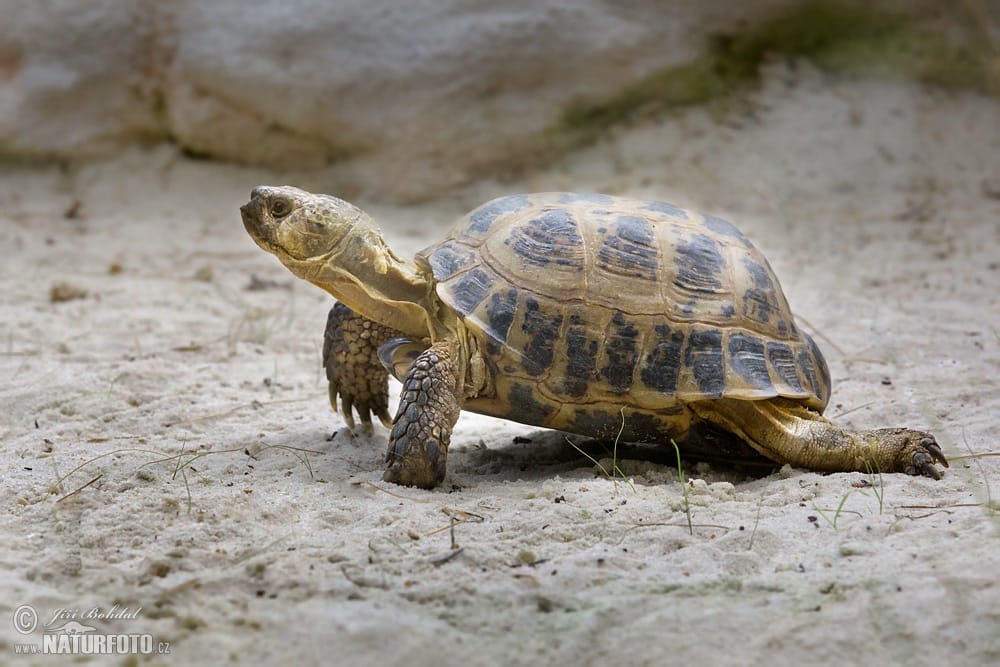
Commonly known as the Russian Tortoise, the Horsfield's is an apex survivor of the arid plains. Evolution has equipped them with four toes and a flattened, sturdy carapace designed for life in high-altitude environments where extreme temperature fluctuations are the norm.
They are the most prolific burrowers of the tortoise world, often digging tunnels several feet long to escape the frost or the midday heat. Their biology is hard-wired for intense activity and exploration. Horizontal exploration and substrate depth are the non-negotiable pillars of Horsfield's Tortoise Care Guide.
Vital Statistics
Common Name: Horsfield's / Russian Tortoise
Lifespan: 40–50+ Years
Activity: Diurnal (High morning energy)
Thermal Range: 18°C - 35°C
Horsfield's Tortoise Habitat Setup: Spatial Dynamics
A professional Horsfield's Tortoise habitat setup prioritizes two things: floor space and dig-depth. These tortoises are notoriously active and "escape-oriented," meaning their enclosure must provide enough enrichment to satisfy their patrolling instincts.
Footprint Focus
A minimum of 120x60cm (4'x2') is required. Horsfield's will pace the perimeter constantly; providing "sight-line breaks" is essential to prevent repetitive stress.
Deep-Burrow Substrate
Horsfield's require at least 15-20cm of substrate. Without the ability to bury themselves, they experience chronic stress and shell growth issues.
Wall Integrity
They are talented climbers. Use solid walls (not glass) at least 30cm high to ensure they cannot see through or scale the enclosure edges.
Horsfield's Tortoise Care Guide: The Herbivore Protocol
Nutrition in Horsfield's Tortoise Care Guide is defined by high fiber and zero animal protein. As steppe-dwellers, their digestive tracts are specialized fermenting engines designed to process tough, fibrous weeds. Feeding fruit or high-protein pellets can lead to rapid, unhealthy growth and renal failure.
We advocate for the Weed-First Strategy: Your tortoise's diet should consist of 90% leafy weeds like dandelions, clover, and plantain. These provide the essential calcium-to-phosphorus ratio required for a rock-solid, healthy carapace.
Always remember: Hydration is internal. While they live in arid environments, Horsfield's require a 15-minute shallow "soak" in lukewarm water 2-3 times a week. This stimulates hydration and ensures they can pass waste and urates effectively.
Maintenance Protocol
Horsfield's Tortoise Care Guide: Wellness & Bio-Signals
In a professional Horsfield's Tortoise Care Guide, we prioritize the "Smooth Shell" indicator. Because Russian tortoises are prolific diggers, they often show wear on their scutes—but raised, lumpy scutes (pyramiding) indicate a history of poor diet or lack of hydration.
UVB & Calcium Absorption: Tortoises have massive skeletal requirements. Without a high-output T5 HO (High Output) source, they cannot synthesize D3, leading to Metabolic Bone Disease. This manifests as a soft shell or dragging limbs.
Beak Maintenance: Feeding on a flat slate tile helps naturally file the beak down through friction, preventing overgrowth that could hinder their ability to graze.
The Health Checklist
Horsfield's Tortoise Care Guide: Locale Identification
The Horsfield's Tortoise is divided into primary subspecies each with distinct visual markers based on their Central Asian origin.
Understanding whether your tortoise comes from the mountainous Afghan region or the Kazakh steppes helps you refine their specific environmental requirements.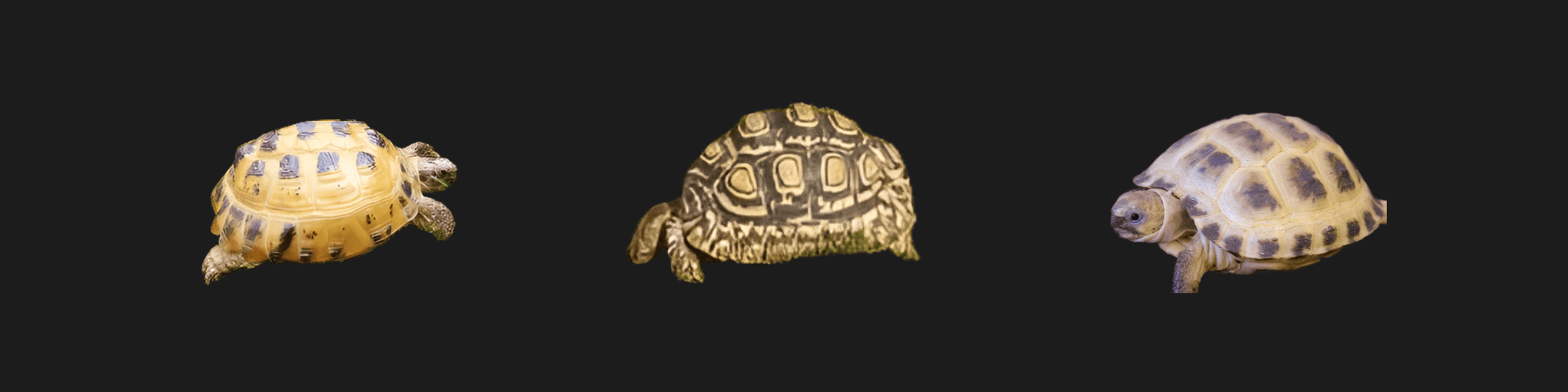
Steppe Variants
Adapted to extreme heat and cold. These variants are the hardiest and require very deep, sandy-loam substrate to burrow and thermoregulate.
High-Altitude Variants
Often darker in color to absorb heat more efficiently. These tortoises may require a slightly higher basking temperature to spark their metabolism.
Shell Geometry
Horsfield's are unique for their more rounded, "pancake-like" flatter shell compared to the high domes of other Mediterranean species.
Horsfield's Tortoise Care Guide: The Solar Gradient
Mastering the Horsfield's Tortoise habitat setup means mimicking the harsh Central Asian sun. You are providing a spectrum of life-sustaining radiation that mimics their native arid plains.
The Basking Core
Basking Spot: 32°C - 35°C (90-95°F). This must be measured at the surface. Overheating a tortoise can lead to rapid dehydration.
The T5 UVB Zone
Horsfield's require high-intensity UVB. This is best achieved using a T5 HO linear tube that covers the majority of the enclosure's activity zone.
Arid Humidity Logic
Keep ambient humidity low (30-50%). However, always provide a moist micro-climate deep within their burrowing substrate for shell health.
The High-Fidelity Horsfield's Habitat Setup Advantage
Russian tortoises are "bulldozers" by nature. They will push, climb over, and attempt to eat everything in their environment. High-fidelity artificial decor and heavy-duty hides offer the durability that live plants simply cannot provide.
By utilizing resin-cast rocks and heavy-duty artificial shrubs, you create a complex landscape that won't be destroyed within a week. These pieces provide vital sight-line breaks and security zones that remain hygienic and attractive for decades. Unlike live plants, these artificial components don't risk being toxic if nibbled on.
Why High-Fidelity?
Sanitation: Easy to scrub and fully waste-resistant.
Dietary Safety: Zero risk of accidental toxic ingestion.
Permanent Cover: Doesn't die back or wilt under heat.
Structural Safety: Heavy rock ledges won't collapse.
The BundleBiome Solution
Designing a tortoise habitat is a generational commitment. At BundleBiome.ca, we’ve engineered the ultimate solution. Our Arid Biome Bundles are curated to provide the exact structural safety and basking surfaces these foragers require.
We hand-select the most durable, heat-resistant components from world-class brands. Every vine, stone-textured hide, and arid shrub in our bundles is chosen to withstand the 35°C basking zones while providing the security and mental stimulation your tortoise needs to live a long, healthy life.
Your Perfect Arid Empire
Build a habitat worthy of an ancient lineage. Our Arid Biome Bundles provide the structural integrity and environmental precision your tortoise deserves.
See All Guides

