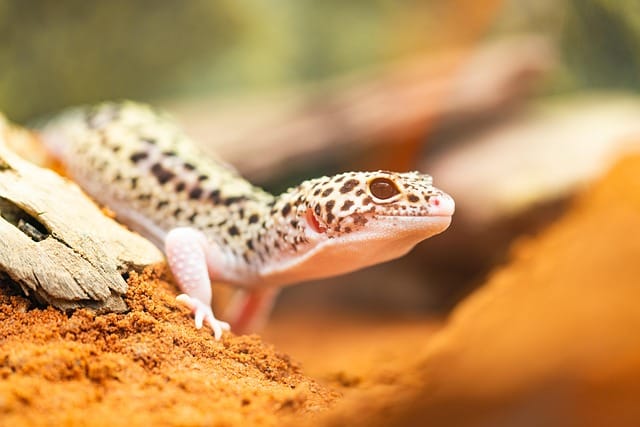
The Ultimate
Leopard Gecko
Care Guide
Built for the arid landscape. This comprehensive guide details every biological requirement of the Eublepharis macularius, from the semi-desert survival traits to the precision of a professional Leopard Gecko habitat setup.
The Leopard Gecko Care Guide: Evolution
Native to the rocky grasslands and arid deserts of Afghanistan, Pakistan, and India, the Leopard Gecko is a marvel of terrestrial adaptation. Unlike most geckos, they possess movable eyelids and lack adhesive toe pads, trading vertical climbing for a life of efficient ground-dwelling movement.
They are masters of metabolic storage, using their thick, segmented tails to store fat reserves for times of scarcity. Their nocturnal nature allows them to avoid the blistering midday sun, emerging at dusk to hunt. This terrestrial evolution makes horizontal floor space the single most important factor in your Leopard Gecko Care Guide strategy.
Vital Statistics
Common Name: Leopard Gecko / "Leo"
Lifespan: 15–20 Years with proper care
Activity: Crepuscular / Nocturnal
Thermal Range: 24°C - 32°C
Leopard Gecko Habitat Setup: Structural Needs
A high-fidelity Leopard Gecko habitat setup is defined by the "Rule of Three." Because they are preyed upon by larger carnivores, security is found in tight, subterranean spaces. Your enclosure must provide three distinct micro-climates: a Warm Hide, a Cool Hide, and a Humid Hide to ensure biological success.
Floor Priority
Leopard Geckos require horizontal space. A 40-gallon long (90x45x45cm) tank is the gold standard, providing enough room for a proper thermal gradient from end to end.
Tactile Terrestrial
While not climbers, they enjoy low-level scrambling. Use textured rocks, slate, and cork flats to create a 3D landscape that mimics the rocky outcrops of their homeland.
The Humid Micro-Climate
One hide must be kept damp 24/7. This "humid hide" acts as a personal spa, providing the localized moisture needed for healthy shedding and hydration.
For a single adult, BundleBiome recommends a minimum of 90cm (36") of horizontal length. This distance is vital for thermoregulation, allowing the gecko to choose between the 32°C basking zone and the 24°C cooling zone as its metabolism dictates.
Leopard Gecko Care Guide: The Metabolic Pulse
Nutrition in Leopard Gecko Care Guide is strictly insectivorous. Unlike other species, they cannot process fruit or plant matter; their biology is engineered to extract maximum protein and chitin from live prey.
We advocate for the Precision Gut-Loading method: Insects are only as nutritious as what they have eaten. Use high-calcium vegetables to feed your crickets or dubia roaches 24 hours before feeding them to your gecko. This ensures a direct transfer of essential minerals that support bone density and neurological health.
Always remember: Heat is digested from below. While overhead heating is beneficial, providing a warm slate surface or a heat mat connected to a thermostat is vital for the "belly heat" they use to break down their meals.
Maintenance Protocol
Leopard Gecko Care Guide: Health & Bio-Signals
In a professional Leopard Gecko care guide, we prioritize preventative observation. Because these reptiles are hardy, they often mask illness until it has progressed significantly.
Metabolic Bone Disease (MBD): This is the most common preventable illness. Without proper Calcium and D3, their bones become rubbery. Ensure you are using a 5-7% UVB linear bulb and dusting insects to keep their skeletal structure "stone-hard."
The Tail Reservoir: A healthy Leo should have a tail roughly as wide as its neck. A thin, "pencil tail" is a red flag indicating parasites or significant under-nutrition that requires immediate intervention.
The Health Checklist
Leopard Gecko Care: Morph Identification
The hobby has transformed the wild spotted pattern
into a diverse palette of vibrant colors and reduced patterns. Unlike Crested Geckos, Leopard Gecko colors remain consistent and do not "fire up" or down, making them permanent living gems.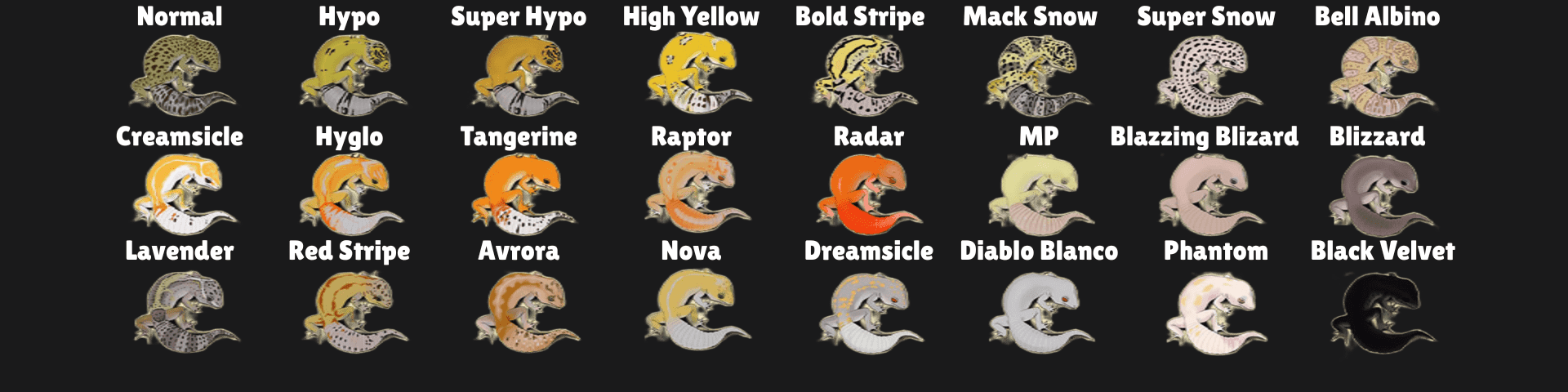
The Genetic Spectrum
From Albinos to Patternless and Eclipses, there are dozens of genetic lines. Some morphs even affect eye color, creating striking "solid black" or "ruby red" looks.
Habitat Contrast
Bright Tangerine morphs pop against dark slate and volcanic rock, while lighter Mack Snows look incredible in environments with heavy cork and driftwood accents.
Growth Shifts
Many Leopard Geckos are born with "bands" that break up into "spots" as they mature. The morph you see as a hatchling will evolve beautifully into its adult form.
Leopard Gecko Care Guide: Heat & Aridity
Creating a high-performance Leopard Gecko habitat setup means mastering the "Arid Gradient." These geckos have evolved for the high-contrast temperatures of the rocky steppe. They require intense heat to digest, but they must have an escape route to stay cool.
The Thermal Gradient
Hot Side: 30°C - 32°C (86-90°F)
Cool Side: 22°C - 24°C (72-75°F). This spread is mandatory for healthy thermoregulation.
Low-Humidity Logic
Ambient humidity should remain low (30-40%). Excessive humidity leads to respiratory infections, making a dry enclosure with a single damp hide the safest setup.
Basking Infrastructure
Use a flat rock or slate piece directly under your heat source. This absorbs thermal energy and releases it slowly, mimicking the sun-warmed rocks of their natural habitat.
The High-Fidelity Leopard Gecko Habitat Advantage
While "desert" often implies "empty," a barren enclosure is a major stressor. Professional Leopard Gecko habitat setups use high-fidelity artificial decor to provide the complexity they crave without the hygiene risks of natural sand or decaying organic matter.
Our curated arid decor pieces provide the exact nooks and crannies geckos use to feel secure. These artificial slate stacks and resin-cast cacti are 100% non-porous and washable. This ensures your gecko’s home remains a sterile, high-performance environment where waste can be easily removed—a critical factor in long-term health.
Why High-Fidelity?
Arid Durability: Won't crack under high heat.
Zero Impaction: No loose particles to swallow.
Easy Hygiene: Sanitize in minutes, not hours.
Solid Structure: Hides won't collapse or shift.
The BundleBiome Solution
At BundleBiome.ca, we specialize in translating complex biological needs into ready-to-use kits. Our Arid Biome Bundles are curated specifically for Leopard Geckos, featuring components from elite brands like Zoo Med and Exo Terra that meet the rigorous demands of a hot, dry environment.
We’ve done the engineering for you. Every bundle includes the primary "Three Hides," thermal-conductive decor for basking, and visual barriers to reduce stress. It’s not just a collection of items; it’s a scientifically balanced system designed to help your Leopard Gecko thrive for two decades.
Your Perfect Arid Biome
Elevate your Leopard Gecko's life with professional-grade infrastructure. Our Arid Biome Bundles provide the thermal precision and security your reptile deserves.
See All Guides

