
The Ultimate
Blue-Tongue Skink
Care Guide
The gentle giant of the scrublands. This biological masterclass covers the specific husbandry required for the Tiliqua ssp, from substrate depth to the engineering of a professional Blue-Tongue Skink habitat setup.
The Blue-Tongue Skink Care Guide: Evolution
Native to the diverse landscapes of Australia and Indonesia, Blue-Tongue Skinks are iconic, heavy-bodied lizards that have evolved to be the ultimate ground-dwellers. Their distinctive cobalt-blue tongue is a specialized defensive tool—an unexpected flash of color used to startle potential predators while they navigate the leaf litter and grasslands.
They are diurnal foragers with a surprisingly high level of intelligence and "personability" for a reptile. Unlike lean, agile lizards, skinks are built for power and persistence. Their evolution dictates a non-negotiable need for significant floor space, deep burrowing opportunities, and a varied diet that mirrors their opportunistic nature in the wild.
Vital Statistics
Common Name: Blue-Tongue Skink / Lizard
Lifespan: 15–20+ Years with proper care
Activity: Diurnal (Active by day)
Thermal Range: 24°C - 38°C (Basking)
Blue-Tongue Skink Habitat Setup: Structural Needs
A high-performance Blue-Tongue Skink habitat setup must prioritize "Horizontal Utility." These are ground-dwelling lizards with limited climbing ability; therefore, every square inch of the floor must be engineered for safety, burrowing, and sensory enrichment.
Footprint Over Height
For an adult, a 120-gallon (4'x2'x2') enclosure is the bare minimum. Skinks are active foragers that require significant travel distance to maintain muscle tone and digestive health.
Substrate Depth
Provide 4-6 inches of moisture-retentive substrate (like coco husk or forest floor). Skinks are compulsive burrowers; the ability to "disappear" underground is vital for their mental security.
Low-Profile Decor
Avoid high, thin branches. Use heavy, wide-base rock ledges, large cork flats, and broad-leaf artificial plants. Skinks are clumsy climbers and can easily injure themselves on vertical decor.
For a thriving adult, BundleBiome recommends an enclosure with a high substrate dam. This allows you to maintain the necessary bedding depth for burrowing without interfering with the front-opening doors.
Blue-Tongue Skink Care Guide: The Omnivore Protocol
Nutrition in Blue-Tongue Skink Care Guide is about diversity. These lizards are biological vacuum cleaners, requiring a precise balance of leafy greens, high-quality proteins, and seasonal fruits to prevent metabolic bone disease and obesity.
We advocate for the Balanced Bowl Strategy: For adults, a mix of 50% vegetables (collards, squash), 40% protein (high-quality grain-free dog food, snails, or dubia roaches), and 10% fruit. This variety ensures they receive the complex micronutrients required for their long-term vitality.
Always remember: Hydration is often overlooked. Because they burrow, skinks can become dehydrated if the lower levels of their substrate are bone dry. A large, shallow water basin is required not just for drinking, but for occasional soaking during a shed cycle.
Maintenance Protocol
Blue-Tongue Skink Care Guide: Health & Bio-Signals
In a professional Blue-Tongue Skink Care Guide, we focus on skeletal health and digit integrity. Because they are heavy and ground-dwelling, their limbs bear significant weight, making them susceptible to husbandry-related injuries.
Retained Shed on Toes: This is the #1 preventable injury. Check their small toes after every shed. If skin remains, it can constrict blood flow and lead to toe loss. A quick "lukewarm soak" and gentle removal is essential.
UVB & MBD: Skinks require high-output Linear T5 UVB. Without it, their heavy bodies will develop Metabolic Bone Disease, resulting in "rubber jaw," spinal curvature, and an inability to walk.
The Health Checklist
Blue-Tongue Skink Care Guide: Morph Identification
Selective breeding has introduced incredible visual diversity to the Northern subspecies of Blue-Tongue Skinks.
Understanding morphs like "Hypo" (high orange/yellow) or "Anery" (grey/silver tones) helps you appreciate the genetic artistry behind these ancient-looking reptiles.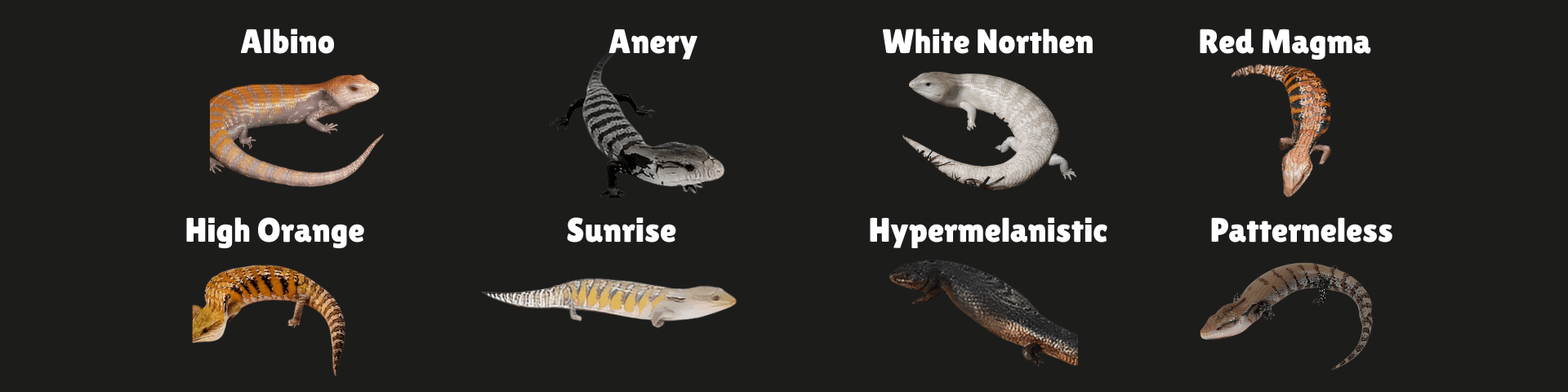
Color Saturates
Morphs like Sunburst and Orange Line amplify the fiery tones, making the lizard stand out dramatically against naturalistic decor.
Visual Reductions
Hypomelanistic morphs reduce black pigment, resulting in a cleaner, more pastel-colored lizard with high-contrast banding.
Pattern Mutations
White-Back and Patternless lines focus on reducing the traditional banding for a sleek, uniform aesthetic that highlights the skink's powerful shape.
Blue-Tongue Skink Care Guide: The Solar Core
Mastering the Blue-Tongue Skink habitat setup means balancing intense heat with subspecies-specific humidity. You aren't just creating a cage; you are recreating an ecosystem.
The Basking Zone
Basking Surface: 35°C - 38°C (95-100°F). Skinks require intense belly heat to digest their omnivorous diet effectively.
The UVB Spectrum
Ferguson Zone 2-3. High-output T5 linear lighting is mandatory. High-intensity UVB facilitates Vitamin D3 synthesis and natural behavior.
Nighttime Rest
A drop to 20°C - 22°C (68-72°F) at night is ideal. This temperature dip mimics the natural cooling of the Australian outback or Indonesian forests.
The High-Fidelity Blue-Tongue Skink Habitat Setup Advantage
Blue-Tongue Skinks are heavy, powerful lizards that can easily uproot real plants and crush fragile decor. While "bioactive" is popular, the high waste output of a skink can lead to soil saturation and bacterial issues. High-fidelity artificial decor offers a superior, durable alternative.
By utilizing heavy resin-cast rock ledges, extra-thick artificial tropical greens, and non-porous stone hides, you create a professional environment that is impossible for a 2-pound lizard to destroy. This ensures your skink has a permanently lush, secure home that can be fully sanitized in minutes, preventing the parasitic blooms common in naturalistic setups.
Why High-Fidelity?
Sanitation: Easy to scrub after messy protein meals.
Durability: Decor won't collapse under the skink's weight.
Zero Impaction: Safe, solid surfaces for feeding.
Visual Impact: Lush greens that never wilt or get trampled.
The BundleBiome Solution
Designing a 4-foot terrestrial enclosure requires a specific understanding of floor-space optimization. At BundleBiome.ca, we’ve engineered the ultimate solution. Our Blue-Tongue Skink Biome Bundles are curated to provide the exact "burrow-friendly" infrastructure these lizards require.
We hand-select the most durable, heat-resistant components from world-class brands. Every wide-mouth hide, heavy-duty vine, and stone-textured ledge in our bundles is chosen to withstand the activity of a heavy-bodied lizard while providing the security and mental stimulation your Blue-Tongue Skink needs for biological success.
Your Perfect Grassland Biome
Your Skink deserves an environment as robust as its personality. Our Biome Bundles deliver the professional infrastructure required for biological success.
See All Guides

