
The Ultimate
Hermann's Tortoise
Care Guide
The ancient wanderer of the hillsides. This biological masterclass covers the specific husbandry required for the Testudo hermanni, from calcium synthesis to the engineering of a professional Hermann's Tortoise habitat setup.
The Hermann's Tortoise Care Guide: Evolution
Originating from the sun-soaked Mediterranean coasts of Europe, Hermann’s Tortoises are small, hardy herbivores built for life among rocky outcrops and aromatic scrublands. Their high-domed shells and powerful, clawed legs are evolutionary adaptations for navigating rough terrain and excavating shallow burrows to escape the midday heat.
They are diurnal grazers with a highly social intelligence. Unlike predatory reptiles, tortoises spend their days in a state of constant exploration, seeking out high-fiber forage. Their evolution dictates a non-negotiable need for massive horizontal space, high-intensity UV radiation for shell development, and a microclimate that mimics the dry, breezy Mediterranean air.
Vital Statistics
Common Name: Hermann's Tortoise
Lifespan: 50–75+ Years with proper care
Activity: Diurnal (Active by day)
Thermal Range: 20°C - 35°C (Basking)
Hermann's Tortoise Habitat Setup: Structural Needs
A high-performance Hermann's Tortoise habitat setup must prioritize "Open-Air Circulation" and "Exploratory Footprint." Unlike snakes, tortoises are highly active roamers that require a wide, unobstructed floor plan to prevent muscle atrophy and boredom.
Surface Area
For an adult, a 4'x2' enclosure is the minimum, though 6'x3' is preferred. Tortoises are "miles-per-day" animals; horizontal space is the most critical factor in their cardiovascular health.
Substrate Depth
Provide 4-6 inches of a soil/sand/coco-coir mix. They need to dig "thermoregulation pits" to sleep in. This depth also provides the necessary resistance for leg strength development.
Visual Barriers
Tortoises can become stressed if they can see through glass. Use solid-sided enclosures or "privacy films." Adding visual barriers like large rocks forces them to navigate and exercise.
For a thriving tortoise, BundleBiome recommends low-profile, open-topped enclosures. This ensures maximum air quality and prevents the stagnant, humid air pockets that can lead to respiratory issues in Mediterranean species.
Hermann's Tortoise Care Guide: The Grazing Protocol
Nutrition in the Hermann's Tortoise Care Guide is defined by fiber. These animals have slow metabolisms designed to extract nutrients from tough, dried weeds and grasses. Feeding high-protein or sugar-heavy foods will cause rapid, unhealthy growth.
We advocate for the Low-Sugar Herbivore Strategy: 90% of the diet should consist of leafy greens (dandelion, clover, plantain weeds) and high-fiber hays. Avoid fruit and animal protein entirely; these cause "pyramiding" (abnormal shell growth) and permanent kidney damage.
Always remember: Hydration is a ritual. While they live in dry climates, tortoises "drink" through their cloaca during shallow soaks. A 15-minute lukewarm bath twice a week is the best way to ensure internal hydration and clear waste.
Maintenance Protocol
Hermann's Tortoise Care Guide: Health & Bio-Signals
In a professional Hermann's Tortoise Care Guide, we prioritize the shell and the respiratory system. Because tortoises are low to the ground, they are the first to suffer from poor floor-level air quality or dusty substrates.
Shell Pyramiding: This is the most common sign of poor husbandry. If the shell plates are growing upward into "peaks" rather than staying smooth, it indicates a lack of humidity or a diet too high in protein.
Beak Maintenance: In the wild, tortoises wear their beaks down on rocks. In captivity, you must provide a "cuttlefish bone" or feed on a flat slate stone to ensure the beak doesn't overgrow and prevent eating.
The Health Checklist
Hermann's Tortoise Care Guide: Locale Identification
Unlike snakes, Hermann's Tortoises are defined by their "Locales" and subspecies (Eastern vs. Western), each with distinct shell patterns and adult sizes.
Understanding the difference between a high-contrast Western locale and a robust Eastern locale is the first step in precise Mediterranean husbandry.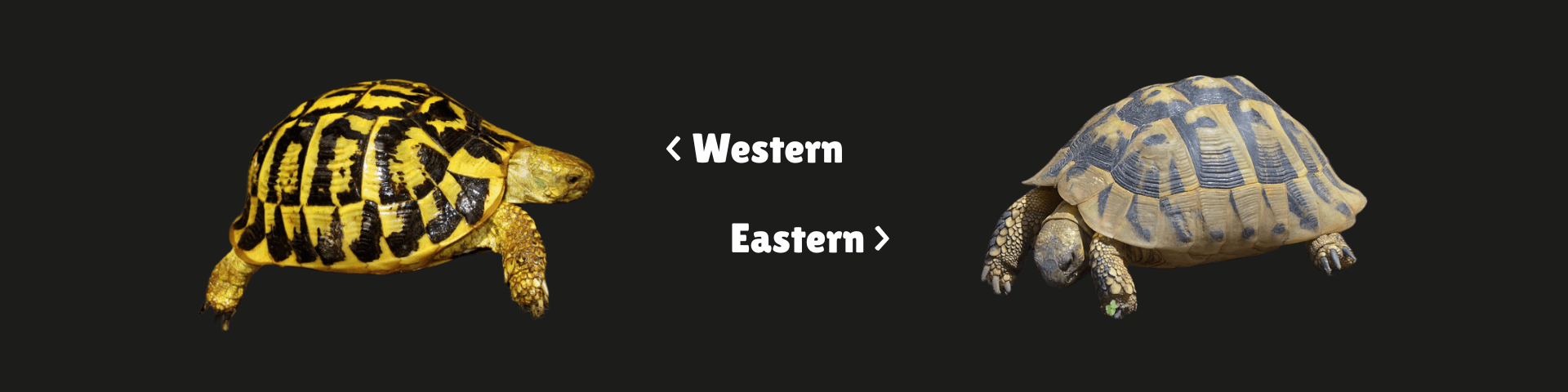
Western Hermann's
Typically smaller (5-6 inches) with vibrant yellow and deep black contrast. They require slightly higher humidity levels and more precise care.
Eastern Hermann's
The more common pet subspecies, growing larger (7-9 inches). They are exceptionally hardy and well-suited for larger indoor "tortoise tables."
Regional Variations
Locales from Tuscany, Sicily, or the Peloponnese each carry subtle differences in plastron markings and "keyhole" patterns on the shell.
Hermann's Tortoise Care Guide: The Solar Engine
Mastering the Hermann's Tortoise habitat setup means providing a massive thermal range. You are building a world where the sun is the architect of their bone structure.
The Basking Core
Surface Temp: 32°C - 35°C (90-95°F). This must be provided by a broad-beam heat lamp that covers the entire shell to prevent localized burning.
The UVB Flood
Ferguson Zone 3. Tortoises require intense, high-output Linear T5 UVB. This is non-negotiable for calcium absorption and shell hardness.
Micro-Humidity
While the air is dry, the "burrow" should be damp (60%). This prevents "pyramiding" and allows the tortoise to hydrate while they sleep.
The High-Fidelity Hermann's Tortoise Habitat Setup Advantage
Hermann's Tortoises are surprisingly strong and will bulldoze through flimsy decor. While real Mediterranean herbs are great for grazing, they are quickly trampled in a captive setting. High-fidelity artificial decor provides the structural "obstacles" needed for physical health.
By utilizing heavy resin rock outcrops, durable artificial scrub-grass, and broad-base slate feeding stations, you create a professional environment that can withstand the "bulldozer" nature of a tortoise. This ensures your pet has a permanent, scrubland-style home that is easy to sanitize, preventing the bacterial buildup common in naturalistic soil-only setups.
Why High-Fidelity?
Structural Integrity: Decor that won't flip or crush the animal.
Sanitation: Easy-to-clean feeding and basking surfaces.
Safety: Non-porous materials that don't harbor mold in damp burrows.
Exercise: Permanent obstacles that encourage climbing and roaming.
The BundleBiome Solution
Engineering a Mediterranean scrubland for a 75-year lifespan is a serious undertaking. At BundleBiome.ca, we’ve done the research for you. Our Hermann’s Tortoise Biome Bundles are curated to provide the exact horizontal complexity and UV infrastructure these ancient grazers require.
We hand-select the most durable, non-toxic components from world-class brands. Every stone-textured hide, heavy-duty scrub bush, and slate basking tile in our bundles is chosen to withstand the decades of use your tortoise will provide, ensuring a healthy, thriving life from hatchling to centenarian.
Your Perfect Mediterranean Empire
Your Tortoise deserves an environment as enduring as its legacy. Our Arid Biome Bundles deliver the professional infrastructure required for biological success.
See All Guides

